From the March issue of Deb’s Quill
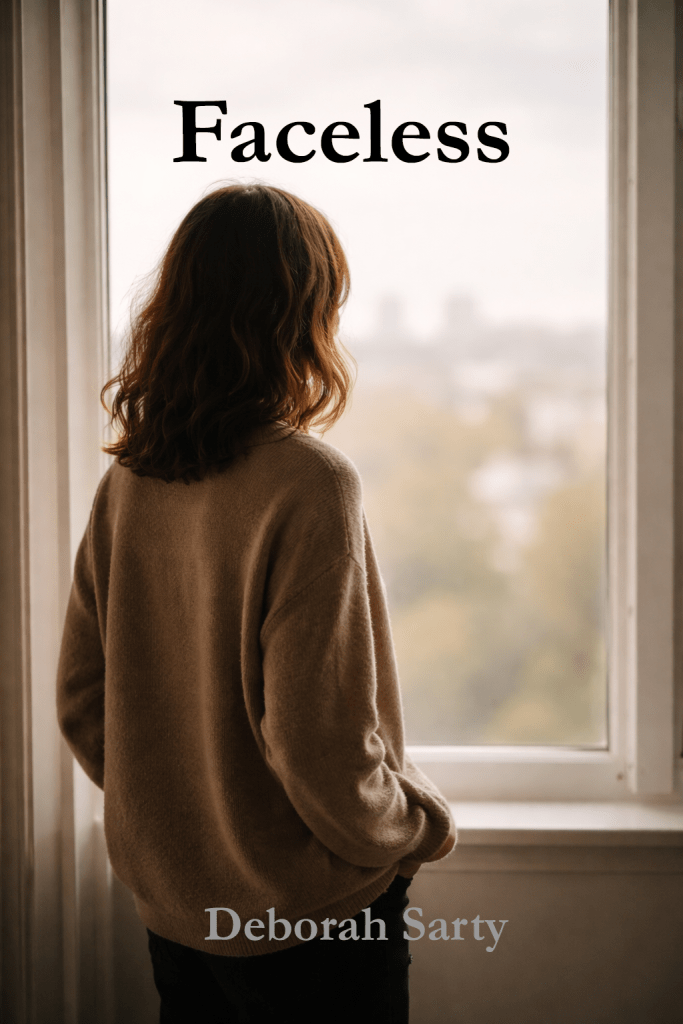
Kristina:
I’d arrived at the cafe several minutes ahead of time, as planned. Bought my double-shot caramel Frappuccino with whipped, took its 3000 calories and my butt to an empty table, and waited.
And let the sweet, strong smell of coffee and caramel waft up my nose while its hot, velvety smoothness slid down my throat. Most days, focusing on these small sensory details was the only thing keeping me sane.
I didn’t bother scanning the other coffee nuts. I wouldn’t process their faces, anyway. My face blindness doesn’t see faces the way a normal person does. Not really. When I look at people, I see their nose where it’s supposed to be. Eyes in their proper place. But the link in my brain that says, this person is Iris, my friend, or Doro, my sister, or Sam, my brother — that connection is missing. The closest I can come to explaining the unexplainable is that everyone’s faces look the same.
So, I listened for their voices, instead. Strained to hear their conversations. It gives me a sense of normality in a life that feels anything but.
I watched the clock, stomach and chest tight with the worry that my sister wouldn’t show up.
A woman walked through the door. Her head swiveled toward me and her hand rose in greeting. I saw the brooch. She’s here. My sister. Doro. My buffer and escape hatch for my meeting with Alan.
I watched the way her long brunette hair curled over her shoulder, and the way she walked with quick, jerky steps and the subtle sway of her hips. Like hundreds of other high-heel-shod women. And the ugly putrid green frog brooch, pinned to her sweater just above her left breast, the place she’d promised she’d always wear it.
So I’d know it was her when she’d reach me and pull me in for a hug.
So I wouldn’t be afraid when she did.
“I’m not going to stop hugging my baby sister,” she’d declared, after a few traumatic hugs and my diagnosis of face blindness.
“You made it here okay,” she said, her voice low and silky. “I knew you could do it.”
“Of course I did,” I said, letting offense override the fear I’d lived every step of the way here. “Maybe I can’t recognize faces anymore, but I can read street signs and, well, everything else. I’m not blind.”
“Sorry.”
I could see she wanted to reach across the table and hug me, so I shoved her coffee into her hands. She shrugged, laughed, and sat.
“I can’t help it, you know,” she said. “I know your accident was a year ago, but I almost lost you. Means I can’t help always wanting to hug you.” She took a long swallow and sighed. “Deal with it.”
I did deal with it. In my own way.
I mean, I was the one lying in that hospital bed for weeks, terrorized by all these faceless strangers grabbing my wrist, shifting my body, touching in all the places where I hurt, asking me endless questions.
A part of my mind knew they were nurses and doctors, but they all looked the same and that scared the crap out of me. It felt like I was in the alien mothership being poked and prodded for some weird Martian experiment.
Once I learned the diagnosis, it got easier. Nurses’ uniforms gave me the information I needed to relax as I was poked and prodded. But still, strangers who weren’t strangers kept coming into my room, trying to hug me or sit close. Who thought it was okay to invade my space.
Doro told me that Alan came every day. I don’t remember that. There were men who came by. I thought they were doctors. I shrank into myself whenever any of them got too close to me.
Maybe Alan was one of them. I don’t know. I just knew, handicapped as I was, that I wasn’t wife and mother material anymore. The thought of telling him in person, when I wouldn’t know it was him, was unbearable. So I texted the breakup. And cried myself to sleep every night thinking about him and the life we almost had.
“Earth to Kris.”
I jerked back, embarrassed. “Sorry. I zoned out.”
“Don’t worry about it.” Doro checked her watch. “I have to run. I’ve got a meeting in ten minutes.”
“You just got here,” I protested, my voice rising. “I came all the way across town for a five-minute get-together?” I searched for the calm place I’d discovered during meditation training, but panic was squeezing my heart. I needed her here as a buffer and wasn’t at all prepared for being abandoned the moment she sat down.
She leaned forward slightly. Her body stilled. “I’m sorry, Kris. Our CEO called an emergency meeting. I made him put it off for a half hour so I could get here to see you but that’s the best I could do.”
She reached across the table, waiting. I resisted for a minute before covering her hand with mine. But it was harder to resist the tears pushing hard against the back of my eyes.
“I’m meeting Alan here in a few minutes,” I said, my voice watery and thin. “I need you. I can’t do this without you.”
Her head moved slightly side to side. I had to guess at the look on her face. Annoyance, probably, with my neediness. But I didn’t care. She couldn’t leave now.
“I know, honey. He told me.” She rubbed my arm gently, as if that would make it better. “I’d stay if I could, but my boss will kill me if I miss this meeting. Besides, you don’t really need me. You think you do. But you don’t.”
Pulling my cell phone out, I opened the messaging app and searched for Alan’s name. “I’ll reschedule.” I started to type, my fingers shaking and missing half the buttons. “No, I’ll cancel. This was a terrible idea.”
She plucked the phone out of my hands and clasped mine in hers. She kept staring, like she’d been doing constantly since the accident. Since I couldn’t see her expression, I interpreted it as the most likely. Pity. It was getting old, and the anger it generated flash-dried the tears.
“Stop it,” I snapped, annoyed that her tactic worked. “I’m fine. Go to your meeting. I’ll meet with him. I’ll survive.”
“There’s the old Kristina. I knew you were in there somewhere.”
She isn’t. The old me died in that car wreck. This version is a fragment of my old self and always will be.
She stayed seated for another minute. Checked her watch a few times.
“Go on, Doro. I’m fine. Really,” I lied.
“I’m coming over to your side for a goodbye hug and kiss,” Doro said, rising.
I shrugged. I recognized her determined tone, so I stood and waited for her embrace. It felt good. It always does. Why do I resist her hugs — when every time, once I get past the faceless fear, they feel wonderful?
I don’t often embrace her back these days but this time I did. She couldn’t hide the surprised tremor in her body, and I promised myself that I’d return her hugs more often. Maybe even initiate one, like I used to — before.
Five minutes after she left, a breeze wafted past me as the front door opened again. A tall man, by the way he wore his suit. Dark skin. Close-cropped afro. His head angled in my direction and his hand rose in a wave. He wore the dark blue pinstripe I’d given him for his thirty-second birthday. With a name tag stuck to his lapel.
I knew who it was, even without the tag.
How did I know it was Alan?
Lots of men wore identical suits. I’d bought it off the rack, after all. Lots of dark-skinned men wore their hair in that same style.
So why, when his face registered zero recognition, did I know it was him?
This knowledge made my heart surge with hope.
Until common sense crashed it down again. I’d invited him here. He said he’d wear the suit. I’d just forgotten. Why had I agreed to meet him? How could I do this without Doro?
I looked to the street and assured myself my car was still there. I could get up right now, and move past him, avoiding his touch, avoiding the conversation I didn’t want to have. But had agreed to because Doro was supposed to be here.
I can’t do this. It’s too much. I gathered my bag, shoved my coffee to the side and rose. Took one step to the side.
But he was there, standing in front of me, arms hanging loosely at his side. His hand twitched, his elbow bent slightly. Then relaxed again. “Kristina. Thank you for meeting with me.”
I froze. His voice sent chills down my spine. That same husky velvet that used to whisper love words in my ear. My loins tightened with longing.
But I straightened my spine, squashed the longing, and turned to his blank face. “Alan.” I forced myself to sit back down.
“I’m going to grab a coffee and muffin, if that’s okay.”
I nodded, grateful for the few extra minutes to find my calm.
“Can I get you anything?” There was kindness in his voice. And something else.
I shook my head, willed my fingers to let go of my handbag, and clasped my hands together on my lap. “No thanks. I’m fine.”
It took several minutes to get his order. I used the time to refresh the reasons why we could never be. I hadn’t texted those to him, but they’d been there, prominent, insistent, from the moment I’d learned what was wrong with me.
What I’d texted had been unfair. “I don’t want to see you. Our engagement is off. Doro will return the ring to you. Don’t contact me.” And then I’d asked the hospital to bar him from my room. It wasn’t fair, I know. But I’d had to, at the time.
And it’s why I agreed to meet him this morning. To explain. To ask his forgiveness for the Dear John text. And to ask him to leave me alone.
He came back to the table, approaching slowly. Then stood for a minute, his head faced in my direction.
I sighed. “I’m fine. I know it’s you. Just sit already.”
His chuckle was so familiar. So warm and inviting. I wanted to laugh with him again. To snuggle into his side and tell each other silly jokes. To laugh so hard, I’d pee my pants.
That brought back the pressure behind my eyes, so I brushed those memories aside.
“Thanks for meeting me, Krissy. Doro told me about your condition and why you barred me from the hospital.” His big, strong hands gripped the coffee but not before I caught their slight tremor.
“I was angry for a long time, you know.” His head tilted slightly. “It was a rude way to break up with me.”
“I’m sorry.” I looked away, toward the car and my escape route. “It’s all I could manage at the time.”
“I figured that out. Eventually. After the anger gave way to grief. I’m not a crier, you know that. But I cried myself to sleep for weeks afterward.” The warm chuckle again. “And there were a lot of broken dishes.”
His head shook. “And I ripped apart most of the clothes you’d left at my apartment.” He shrugged. “Sorry about that. They were great clothes.”
“I’d forgotten about them.” I looked at my hands, rubbed the scar that reminded me, daily, of the many surgeries I’d undergone. This hand would never be as nimble or as strong but today it helped keep me centered. “And I’m sorry — truly sorry — for the pain I caused you. But it’s for the best. I hope you see that now.”
Silence stretched. Until finally I had to lift my eyes to his featureless face.
“I don’t see it, Krissy. Not at all.” His hand stretched across the table, but stopped, waited. “I love you. Have from the moment you held the door open for me.” He raised his hand, so I stayed silent. “I know you were just being polite that day, but you were so beautiful, so kind. I knew right then that you were special. You still are.”
“I’m disabled, Alan. That means I’m not the same person you fell in love with. I’m just not.”
“Bullshit. You have a disability. You, Kristina Marsh, are not disabled.” He sat back and ran his hand across his tightly wound hair. Then sighed. “I read about this guy the other day. Born with stunted arms and legs. Thalidomide, I think. But he has a wife and children. Works as an IT specialist. Mans the barbecue on weekends. Helps his neighbors when he can.”
He leaned forward again, placed his hands flat on the table. I remembered this posture. Annoyed. And the tone was angry. “His life is pretty fricking normal, Krissy. And his disability is far more limiting than yours. Why do you have to make yours, a molehill, into such a fricking mountain?”
I shoved my chair back. The car was so close. My hand tightened around my bag. But the anger building in my head kept me rooted.
“A molehill?” I picked up the remains of his muffin and mashed it into the table. “A molehill? You have no idea how terrifying it was in the hospital. Everyone was a stranger. Everyone! People came in, expecting me to know them. I didn’t. They wanted to touch me, to pat my hand, to lean in for a hug. But they were strangers.” I swiped the tears away.
“They were strangers,” I whispered.
“I know.” He reached across and touched my arm, his voice soothing. “I’m sorry.”
I slapped his hand away, then dug a tissue from my bag. “You don’t know. You can’t. That guy? The thalidomide guy? Yes, he has physical disabilities more restrictive than mine. I get it. But you know what he can do that I can’t?”
How can I make him understand the terror I live with?
“He knows his family. His neighbors. He takes his kid to the mall and the kid wanders off, but he can find his kid in a crowd. He gets separated from his wife in a car park, but he can look around and find her. Because he knows what she looks like. He can greet neighbors on the street because he recognizes them.”
“I’m sorry. I shouldn’t have compared you to him.” He paused. I imagined his jaw working as he struggled to control his anger – that memory still accessible. “But dammit, what I was trying to say is that yours is manageable. We can figure it out.”
I had to laugh but with bitterness, not humour. “Figure it out? Like what? Are you going to wear this one suit for the rest of your life? Always wear a name tag? Are we going to tether our kids to me so they can’t wander off? Are they going to wear different colored gowns when they graduate so I know when they walk across that stage?”
He leaned in, his voice an angry whisper. “Yes, dammit. If we have to. We love each other. We belong together. That means we do whatever we have to. Whatever we have to.”
The pressure behind my eyes and in my chest was unbearable. He didn’t understand. He never would. This whole idea was the mistake I’d known it would be. I gathered my bag and stood on shaky knees.
“I don’t want that anymore, Alan. I don’t know how else to say it.” I hated the wetness sliding down my cheek, knew it would turn into a flood before long.
“I won’t have kids. I won’t marry you. Please leave me alone.”
I made it to my car. As I left the cafe, I caught a glimpse of Alan still sitting at the table. His face was turned toward me. I couldn’t read his expression, but his shoulders were slumped. I searched my memory of our time together. I’d never seen his shoulders slumped before.
I drove two blocks before pulling over. I wanted to keep going, to reach my apartment, the only place I felt safe. But tears blurred my vision. I had to stop.
There was no point trying to hold the flood back. No one was around to pity me or tell me everything would be all right. It wouldn’t. So, I let them fall unchecked, in great racking waves, until there was no water left in my body.
Alan
The minute he said it, he knew it was a mistake. Calling her disability a molehill.
Idiot.
He thought he was past the anger of being dismissed from her life so easily. Clearly, he’d been wrong. He wouldn’t have been that dismissive otherwise. He’d kick himself around the block if it would do any good. It wouldn’t.
He wasn’t giving up. His mother, angry on his behalf, had told him to move on. But how could he? When you meet the one, it’s forever. Krissy was the one. She had been from the moment he met her and would be until the day he died. He had to find a way to reach her, to get past the defensive wall she’d erected.
He picked up his phone and texted Doro, as promised.
She’s gone, Doro. I messed up. TY for giving me this chance.
U giving up Alan?
No! Just need to think of how to reach her.
Kristina
I stayed in bed and cried myself to sleep for the next few days. But my burning, itchy eyes and raw, stuffy nose forced me up.
I dusted, vacuumed, rearranged closets, washed every piece of clothing and linens. I even ironed my sheets and towels.
Standing at the ironing board, iron in hand, the absurdity struck me hard, and I sank to the floor in great hiccupping fits of laughter until my sides ached and my throat was raw.
Ironing towels? Come on Kristina. Get a grip.
Eventually, I slept again but this time, no tears.
Next morning, I logged in to my remote help-line job. “Hello. My name is Kristina. How can I help you?” Voices, I could deal with. The money didn’t hurt, either.
Later that week, I attended my therapy appointment, but all my therapist wanted to talk about was why meeting Alan had shot a torpedo through my recovery.
“It didn’t,” I insisted. “I don’t love him anymore, so it was just a chore to get through.”
“Prove it,” Doc McAlister challenged. “Go through your photo albums with dry eyes. Do that, and you’ll know you’ve moved on.”
The photo albums were still in the box Doro brought over the day she moved me out of Alan’s apartment. Almost a year ago. I brushed the layer of dust off, sneezed, and opened it. My hand hovered, started to close the lid but Doc’s words came back.
I closed my eyes, reached in and grabbed the nearest album, opened it. I knew who the people were because I remembered the events. Alan was in every — single — one.
Here we were on the beach in Greece, yachts out in the harbour, brightly colored buildings behind us. The sand was so fine, it felt like silk. The deepest blue sky stretched for miles. My finger traced Alan in swimming trunks, hair glistening, skin dripping from the ocean. His face was lost to me but not the memory. It’s where he proposed.
My hand brushed away tears, and I grabbed a tissue and blew my nose.
This one. Our engagement party. Doro wore a sexy low cut, thigh-high dress. Andy, her husband, couldn’t take his eyes off her. My brother Sam, with his arm around his latest girlfriend. Mom and Dad, sitting quietly on the couch, contented smiles on their faces.
And Alan, staring at me and the camera, long lashes framing bedroom eyes. I remember my body heating, and my mind racing to find an excuse for us both to leave.
And then the memories rolled in of the things that don’t show up in photos – at least not the ones we took. The way his muscles rippled under my hands. The feel of my fingers in his hair. The heat of his lips against mine. Lying under him as we made love — and then waking up the next morning curled into his side.
Loneliness and racking sobs came crashing in again. I fell asleep, curled into a ball on the floor, cradling the album.
Doro came by a few days later. I didn’t have the energy to pretend I was happy.
“I love you, sis, but you’re being an idiot. You love him. It’s written all over your face.”
She wasn’t wrong.
“So what, Doro? It doesn’t change anything. He might tolerate my not knowing him for a few years, while the sex is still good. But he’ll get tired of me before long. You know he will. He’s human.”
She sighed, her head dipped and her hand slid roughly through her hair. I remember those mannerisms. Annoyance.
“You have two choices, Kris. Don’t marry him and be alone for the rest of your life. That sounds crappy, if you ask me. Or take a chance and marry him. If it doesn’t work out, it doesn’t. So what? At least you tried. At least you’ll have a few years of happiness.” She reached out and caressed my hair behind my ear. “While the sex is good, I mean.”
I laughed and pulled her in for a hug. “While the sex is great, you mean.”
After she left, I wandered the apartment. Cried a bit. Sat at my desk. I took a few help calls but couldn’t concentrate.
Wandered the apartment again. It was so empty.
I heard from Alan the next day.
Can we talk, Krissy?
We can talk. I think it’s hopeless, but I’ll listen.
His reply was immediate, like he’d dropped everything the minute my message pinged his phone.
Just talk. U talk. I’ll listen.
We met the next day. The Moncton autumn air was crisp. The leaves were turning and the walkway was canopied by glorious shades of red, yellow and orange. Withered leaves crunched under my shoes as I headed to our meet. This park bench was the one we often stopped at when our hikes were especially long.
I was bundled in my fall coat and wool hat to keep the chill out. And I waited, stomach fluttering, pulse racing.
I think I’ve spotted him, the tallest black man in sight, walking with a confidence I envied. His overcoat was one I’d never seen, and doubt slid in.
Was it Alan?
Then I saw it, the ridiculously colored scarf my mother made him for Christmas a few years earlier. She’d used scraps of wool, and many of the colors clashed outrageously. It was a joke gift, but one he’d refused to toss aside.
I laughed.
And his returning laughter boomed out. My heart fluttered with hope. That laugh – I’d know it anywhere.
He stopped before me, giving me space, waiting for my cue that he could sit, I supposed. I don’t know why but I needed to touch him, to kiss his cheek. So I stood and did. He returned the embrace gently, like I was made of porcelain.
“The scarf is a nice touch,” I said.
“Your mom suggested it.”
Was there anyone in my family that he hadn’t colluded with?
“Doro thinks I’m an idiot for ghosting you. I still think our marriage won’t withstand the annoyance you’ll feel whenever I don’t recognize you. Or the hoops you’ll have to jump through, so I don’t think you’re a stranger and run away every time you try to get near.”
“Can I put my arm around you?”
His voice was uncertain and I’d caused his confidence to falter. Another tick in the “con” column. But I nodded, because I missed leaning into his side, missed his strength and warmth.
“Doro’s wrong,” he said. “You’re not an idiot. You’re just afraid.” He hugged me tighter and I leaned my head on his shoulder. “I can’t promise it’s going to be easy, Krissy. And I won’t diminish the struggle you must face every day. I just think it will be easier if we face it together.”
“I love you, Alan. I tried to tell myself I was over you, but I’m not. Probably never will be. But that’s an awful burden I’d be saddling you with.” I pulled away, stared at eyes I didn’t recognize. “Heck, I don’t want to deal with this. And I’m asking you to?”
“You aren’t asking. I want to share this burden with you. Just like we’ll share the joys, too. Our lives will be filled with both pain and joy. That’s life. But both are better when shared. I know that. So do you.”
“And when you’re feeling sad, or tired, or angry – and I won’t know it because I can’t see it written on your face – that won’t hurt you? Or anger you more?
His shoulders shrugged and he pulled me close. “I communicate for a living, sweetheart. I think I can make a habit of telling you how I’m feeling.”
We sat for a while. He had an answer for every reservation I had. Except, maybe, this one.
“You want kids.” I didn’t let him answer. I knew he did. “I don’t. Not anymore. Not like this. I don’t want to live in terror every time they’re out of my sight for a minute. Afraid I won’t recognize them. Afraid I’ll lose them.”
I felt the air whoosh out of his lungs, and I lifted my head from his chest. This was the deal-breaker. I knew it would be. He was just realizing it.
“Yes, I wanted kids. With you. But I want you more. I’m fine with being DINKS. As long as I have you.” He stroked my face and kissed me softly. “Besides, think of all the money we’ll have for travel and fun. Kids are expensive!”
I laughed. It dawned on me that I was laughing again since he came back into my life. I hadn’t laughed in a long time. Not since the accident. And it felt wonderful. Being with him felt wonderful.
“I’m still not certain, Alan. Much as I love you, I think life with me will be a lot harder than you realize. But I’m willing to think about it. Okay? Just maybe go on a few dates, see how it goes. See how often I panic. How annoying you find it. See if you still feel the same in a month or two.”
“I can do that,” he said, bringing my hands to his lips and kissing them.
“Baby steps, it is.” Then he laughed and bumped heads with me. “And while we’re taking it slow and easy, I’m going to envision life as DINKS and start researching all the exotic vacations we can have.”
I laughed with him and laid my head on his chest. His heartbeat was steady, and loud, even through his coat, the wool rough against my cheek. His breath warmed my hair. His arm circling me helped keep the world at bay. I felt safe here. And loved.
A sigh from the depths of my heart whispered out. This — this was familiar. Comforting. Sitting here, like this, with my eyes closed, it was easy to let myself think we had a chance together.
This will only last until you open your eyes. You know that. Right?
I did. This dream of a normal life together would probably all prove to be a fantasy. Yet Doro’s words came back.
I could assume failure and not even try. Or I could find the courage to try and maybe — just maybe — we’d have a chance. It’s all I had right now, that one word — maybe.
And I found myself clinging to that tiny scrap of hope.
The End
© Deborah Sarty. All rights reserved. This story may not be reproduced without permission.
Enjoyed this story? New short fiction appears first in Deb’s Quill, my free monthly newsletter.
 Deb's Quill